Verified
I used it after a dental infection started causing cheek swelling. The pain settled after the second day, but I had soft stools until the course ended. Taking it with breakfast and dinner helped.
12 May 2025

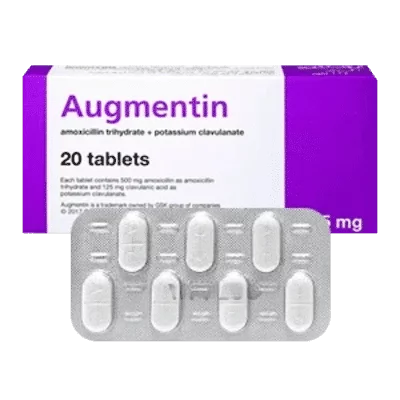
Augmentin is an antibiotic tablet for adults and adolescents with susceptible bacterial infections. The dose is stated on the pack — follow the leaflet. Its amoxicillin component attacks bacteria, while clavulanate protects amoxicillin from enzymes that could reduce its activity.
Augmentin is an antibiotic tablet containing amoxicillin trihydrate and potassium clavulanate. The dose is stated on the pack — follow the leaflet. Amoxicillin belongs to the penicillin family of beta-lactam antibiotics. Potassium clavulanate is a beta-lactamase inhibitor, meaning it blocks some bacterial enzymes that can deactivate amoxicillin.
Augmentin combines two antibacterial substances in one tablet: amoxicillin trihydrate and potassium clavulanate. Amoxicillin belongs to the penicillin family of beta-lactam antibiotics. Potassium clavulanate is a beta-lactamase inhibitor, meaning it blocks some bacterial enzymes that can deactivate amoxicillin.
The dose is stated on the pack — follow the leaflet.
The dose is stated on the pack — follow the leaflet. The exact course length depends on the infection site, severity, kidney function, and clinical response.
Taking the tablet with food can reduce nausea and stomach discomfort. Space doses as evenly as possible across the day. A regular routine also keeps antibacterial concentrations more stable.
Kidney impairment can require a different dose or a different formulation. A person receiving dialysis also needs an individual regimen. NICE antimicrobial guidance uses dose selection according to infection severity, clinical factors, and likely pathogens rather than treating every respiratory symptom with the same antibiotic schedule [3].
Amoxicillin enters susceptible bacteria and interferes with proteins needed to build a stable cell wall. As the bacteria divide, their weakened walls rupture. Potassium clavulanate has little antibacterial effect when used alone, yet it binds certain beta-lactamase enzymes produced by resistant bacteria.
This pairing broadens activity beyond amoxicillin alone for some infections. It does not overcome every form of bacterial resistance. Bacteria can still resist treatment through altered target proteins, reduced drug entry, or other enzyme systems.
The FDA prescribing information describes amoxicillin-clavulanate as a treatment for infections caused by susceptible beta-lactamase-producing organisms, while warning against use when there is no proven or strongly suspected bacterial infection [2].
Augmentin may be used for bacterial infections affecting the chest, sinuses, ears, urinary tract, skin, dental tissues, and some soft-tissue sites when the likely bacteria are susceptible. It does not treat viral illnesses such as uncomplicated colds, flu, or most sore throats. The WHO AWaRe Antibiotic Book lists amoxicillin-clavulanic acid as an Access-group antibiotic, while stressing that antibiotic choice should match the likely infection and local resistance patterns [1].
| Option | Main mechanism | Typical clinical role |
|---|---|---|
| Amoxicillin-clavulanate | Penicillin antibiotic plus beta-lactamase inhibitor | Suspected susceptible bacteria with beta-lactamase production |
| Amoxicillin alone | Penicillin antibiotic | Narrower bacterial coverage when clavulanate is unnecessary |
| Doxycycline | Tetracycline antibiotic that blocks bacterial protein production | Selected respiratory, skin, or atypical bacterial infections |
Amoxicillin alone can be preferable when it adequately covers the infection because it has a narrower antibacterial footprint and may cause less diarrhoea. Doxycycline works by a different mechanism and can be useful in selected infections, though it has its own concerns, including sun sensitivity and restrictions during pregnancy and childhood.
Augmentin is not automatically the stronger choice for every infection. It is chosen when its expected bacterial coverage offers a meaningful advantage. Overuse can promote resistance and expose the patient to side effects without benefit.
Warfarin and related anticoagulants may require closer INR monitoring during antibiotic therapy because infection, diet changes, and antibiotics can alter anticoagulant response. Allopurinol can increase the chance of skin rash with amoxicillin. Methotrexate levels may rise because penicillins can reduce its renal clearance.
The Cochrane review on antibiotic treatment for streptococcal pharyngitis also supports targeted antibiotic use rather than routine broad coverage for every sore throat [5].
Augmentin is not for you if you have previously had an immediate or severe allergic reaction to amoxicillin, penicillin, or another beta-lactam antibiotic. It is also unsuitable for people who previously developed jaundice or liver dysfunction linked to amoxicillin-clavulanate.
The risk of serious penicillin allergy is low in the general population, yet a past reaction involving breathing difficulty, swelling, collapse, or blistering skin should never be dismissed as a minor intolerance.
Most people who use Augmentin tolerate the course without serious problems. Digestive effects are the most common limitation, especially loose stools, nausea, vomiting, or abdominal discomfort. Thrush can develop because antibiotics may disturb normal bacteria in the mouth or genital area.
Possible effects include:
Seek urgent medical care for facial swelling, wheezing, breathing difficulty, widespread blistering rash, or faintness after a dose. These may indicate a serious allergic reaction. Severe, persistent, or bloody diarrhoea during treatment or after the course needs prompt assessment because antibiotics can occasionally trigger Clostridioides difficile colitis.
Liver-related reactions are uncommon but can occur, usually with raised liver enzymes or jaundice. Yellowing of the eyes or skin, dark urine, pale stools, or marked upper abdominal pain require medical review. EMA guidance on antibacterial medicines highlights the need to monitor clinically significant adverse reactions and to weigh benefits against avoidable antibiotic exposure [4].
In clinical practice, prescribers often select Augmentin when they suspect bacteria that may produce beta-lactamase enzymes. Dental infections with spreading soft-tissue involvement, selected sinus infections, bite wounds, and some chest infections are common examples where this combination may be considered.
Doctors also pay attention to the infection source. A dental abscess may require drainage. A wound may need cleaning. A urinary infection may require a urine test when symptoms recur or are severe. Antibiotics work best when the underlying source is also addressed.
A common expectation problem is stopping after two or three days because pain or fever improves. Early improvement is encouraging, but it does not prove that every susceptible bacterium has been cleared. Completing the prescribed course reduces the risk of relapse.
NAFDAC’s antimicrobial stewardship messaging aligns with WHO principles: antibiotics should be used for a clear bacterial indication, at an appropriate dose, and for an appropriate duration.
No. Colds and influenza are caused by viruses, while Augmentin targets susceptible bacteria. The WHO stated in its 2023 AWaRe guidance that antibiotics should be reserved for bacterial infections where they are indicated. Taking an antibiotic for a viral illness can cause side effects without treating the cause. Persistent breathing difficulty, chest pain, dehydration, or a high fever needs clinical assessment.
The antibiotic begins acting against susceptible bacteria after doses are absorbed, yet symptom improvement often takes two to three days. The FDA prescribing information published in 2013 advises reassessment when expected clinical improvement does not occur. Severe pain, rising fever, spreading redness, or worsening breathing symptoms should not be managed by simply taking extra tablets. The infection may need examination, testing, drainage, or a different treatment plan.
Yes. Taking tablets at the start of a meal is usually preferred because it can reduce stomach upset and support absorption of clavulanate. EMA antibacterial guidance updated in 2022 recognises tolerability as an important part of appropriate antibiotic treatment. Food does not replace the need for evenly spaced doses. Alcohol does not directly cancel Augmentin’s antibacterial effect, though avoiding excess alcohol is sensible when nausea, dehydration, or liver symptoms are present.
Take the missed tablet when you remember unless it is almost time for the next scheduled dose. If the next dose is close, skip the missed tablet and resume the normal schedule. NAFDAC’s 2022 drug-use guidance supports avoiding double doses unless a prescriber gives a specific instruction. Two tablets at once can increase nausea, vomiting, and diarrhoea without reliably correcting the missed interval.
Yes. Antibiotic-associated diarrhoea can start during treatment or after the final tablet because normal gut bacteria can be disturbed. NICE guidance from 2019 advises assessment for severe, persistent, or bloody diarrhoea after antibiotic exposure. Mild loose stools may settle naturally, while severe cramping, fever, dehydration, or blood in stools needs urgent medical care. Do not self-treat severe diarrhoea with anti-diarrhoeal medicines before medical advice.
Amoxicillin-clavulanate may be used during pregnancy or breastfeeding when a prescriber judges that it is appropriate for the infection. The WHO’s 2023 antibiotic guidance supports infection-specific prescribing, since untreated bacterial illness can also create risk. Pregnancy, planned pregnancy, breastfeeding, kidney disease, and liver disease should be considered before the treatment plan is set. A baby who develops persistent diarrhoea, thrush, or a rash during breastfeeding should be assessed.
Your order will be securely packed and shipped within 24 hours. This is exactly what your package will look like (images of an actual item sent). It has the size and look of a regular private letter (24x11x0.7 cm) and its contents cannot be seen.