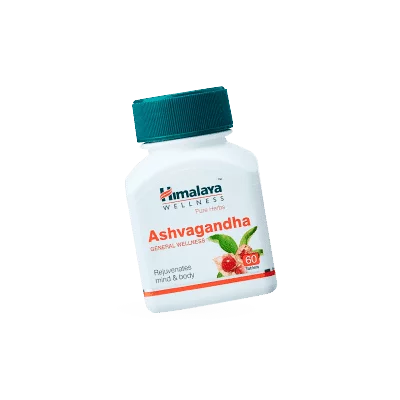
Ashwagandha is a botanical wellness supplement for adults seeking support with stress, sleep, focus, and general wellbeing. Its withanolides may help influence the body’s stress-response systems and support a more balanced response over time.
Description
Ashwagandha is supplied in a bottle containing 60 units for general wellness use. The active botanical ingredient is ashwagandha, also called Withania somnifera. It belongs to the adaptogen category, a term used for plants studied for their potential role in helping the body adapt to physical and psychological stress.
Composition
Ashwagandha is supplied in a bottle containing 60 units for general wellness use. The active botanical ingredient is ashwagandha, also called Withania somnifera. It belongs to the adaptogen category, a term used for plants studied for their potential role in helping the body adapt to physical and psychological stress.
Withanolides are the best-studied natural compounds in ashwagandha root. Research has explored their effects on stress perception, sleep quality, anxiety symptoms, inflammation markers, and physical performance. Evidence is promising for stress-related wellbeing, though supplement effects are usually gradual rather than immediately noticeable. [1]
Ashwagandha is best viewed as a daily wellness supplement, not an occasional product for a stressful day. Regular use gives the body time to respond.
Adults often choose Ashwagandha when stress affects concentration, mood, sleep routines, or day-to-day energy. It may also suit people whose workload, family responsibilities, or intensive exercise leaves them feeling mentally worn down.
Dosage and usage
Take Ashwagandha orally as directed for the bottle’s stated daily serving. Swallow the unit with water. Taking it with food can be useful for people who are prone to stomach sensitivity.
Use the same time each day to make the routine easier to maintain.
Morning use may suit people seeking daytime composure and concentration.
Evening use may suit people who associate stress with difficulty winding down.
Do not take extra units after a difficult day in an attempt to create a faster effect.
Allow several weeks of consistent use before judging its contribution to wellbeing.
If a serving is missed, continue with the next planned serving.
Do not double the amount.
For the first week, keep a simple note of sleep timing, stress level, and stomach comfort. It helps distinguish a real pattern from a single unusually busy day.
How it works
Ashwagandha does not work like a sedative or stimulant. Its main activity appears to involve the hypothalamic-pituitary-adrenal axis, often called the HPA axis. This system coordinates the release of cortisol, the hormone associated with the body’s response to stress.
When cortisol stays elevated for long periods, some people experience poor sleep, tension, irritability, reduced concentration, or fatigue. Ashwagandha extracts have been studied for their ability to support a more balanced stress response and, in some clinical trials, reduce perceived stress scores and cortisol levels.
Its effects may also involve GABA-related signalling. GABA is a chemical messenger that helps calm nerve activity.
Indications
Ashwagandha is intended for adults seeking general wellness support, including support with stress, sleep, focus, and overall wellbeing. Its withanolides may help influence the body’s stress-response systems and support a more balanced response over time. Use it orally as directed on the pack and allow several weeks of consistent use before assessing its contribution.
Comparison
Ashwagandha has a different role from medicines used for diagnosed anxiety or sleep disorders. It supports stress management but is not a replacement for treatment prescribed for a psychiatric, endocrine, or sleep condition.
Approach
Main role
Typical limitation
Ashwagandha supplement
Supports stress resilience and general wellbeing
Effects may be gradual and vary between individuals
Prescription anxiety treatment
Treats diagnosed anxiety disorders under clinical care
May cause medicine-specific adverse effects and requires review
Sleep-hygiene measures
Supports regular sleep timing and recovery
Needs consistency and may not resolve medical insomnia alone
A prescription medicine may be appropriate when anxiety disrupts work, relationships, appetite, or sleep most days. Ashwagandha is more suited to mild stress-related strain and a wellness routine. Combining several stress-management habits usually works better than relying on one supplement alone.
Contraindications
pregnancy or breastfeeding;
current liver disease or a history of unexplained liver injury;
an overactive thyroid or treatment with thyroid hormone;
autoimmune conditions such as lupus, rheumatoid arthritis, multiple sclerosis, or autoimmune thyroid disease;
use of immunosuppressant medicines;
use of sedatives, medicines for anxiety, sleeping medicines, or anticonvulsants;
diabetes treatment, since ashwagandha may influence blood-glucose control;
blood-pressure treatment, since additive blood-pressure lowering is possible.
The National Center for Complementary and Integrative Health advises against ashwagandha use during pregnancy and breastfeeding, and highlights possible interactions with medicines for diabetes, blood pressure, thyroid conditions, immunity, and sedation. [3]
When this is not for you
Ashwagandha is not suitable if you are allergic to Withania somnifera or have previously had a serious reaction to it. Speak with a healthcare professional before using it if you are pregnant or breastfeeding, have liver, thyroid, or autoimmune problems, or take medicines for sedation, immunity, diabetes, or blood pressure.
Side effects
Most adults tolerate ashwagandha without major difficulty when used as directed. Mild digestive symptoms can occur, including nausea, loose stools, stomach discomfort, or drowsiness. These effects may be more noticeable when the supplement is taken on an empty stomach.
A small number of liver injury cases linked to ashwagandha-containing supplements have been described in medical literature. Symptoms such as yellowing of the eyes or skin, dark urine, persistent nausea, unusual itching, or upper abdominal pain require prompt medical assessment. [2]
Possible reactions include:
stomach upset or diarrhoea;
sleepiness or a heavy, relaxed feeling;
headache;
skin rash or itching in people sensitive to a component;
changes in thyroid-related symptoms in susceptible individuals.
If Ashwagandha causes daytime sleepiness, moving the daily serving to the evening may be more comfortable. Do not combine it with alcohol to intensify relaxation.
People who already use sedating medicines should be cautious. Drowsiness can be stronger when ashwagandha is combined with sleep medicines, anti-anxiety medicines, opioid pain medicines, or sedating antihistamines.
Common mistakes
One common mistake is expecting Ashwagandha to work like a fast-acting calming medicine. Ashwagandha does not provide rapid relief. Daily consistency matters more than taking an irregular extra amount during a difficult week.
Another mistake is stacking several relaxing products at once. Combining Ashwagandha with alcohol, sleep aids, sedating allergy medicines, or strong herbal sedatives can increase drowsiness and make it harder to identify what caused an unwanted reaction.
Some people stop after a few days because they do not feel an obvious change. Clinical studies examining stress outcomes have generally assessed use over weeks, not one or two doses. A 2019 controlled trial found improvements in stress and anxiety measures over an eight-week period in adults receiving a standardised ashwagandha extract. [5]
Do not start Ashwagandha immediately before an exam, long road journey, or unusually demanding workday. Begin on an ordinary day so you can assess how your body responds.
What doctors say
In clinical practice, doctors often see stress as a cluster of symptoms rather than a single problem. Poor sleep, fatigue, irritability, tension headaches, reduced concentration, and low motivation can feed into each other.
Ashwagandha may be a reasonable supportive option for adults with mild stress who want a botanical supplement as part of a structured routine. The realistic expectation is improved coping, not a sudden removal of life stressors. It may help some people feel steadier over time.
Physicians are more cautious when symptoms began suddenly, became severe, or appear alongside weight loss, palpitations, persistent low mood, panic episodes, jaundice, or major sleep disruption. Those symptoms can point to thyroid disease, depression, medication effects, anaemia, or another condition requiring targeted care.
The WHO has documented traditional medicinal use of Withania somnifera, while modern clinical studies continue to assess its potential in stress-related wellbeing. [4]
Frequently asked questions
Can Ashwagandha help with stress?
Ashwagandha may support stress resilience in some adults, especially when stress is linked with restlessness, poor sleep, and mental fatigue. Controlled studies have reported improvements in perceived stress measures with regular use of standardised extracts over several weeks. Research reviewed by the National Center for Complementary and Integrative Health in 2024 describes potential benefits, while also stressing that product formulations and study quality vary. It is not a treatment for severe anxiety or a mental-health emergency. Results vary among products and individuals.
How long does Ashwagandha take to work?
People who respond often notice gradual changes over several weeks rather than within hours. Sleep may be the first area to shift, followed by a steadier mood or better tolerance of daily pressure. A 2019 clinical trial published in Medicine assessed outcomes over eight weeks, which reflects the timescale usually used in research. Daily routine, caffeine intake, sleep habits, and baseline stress levels can all affect the experience.
Can Ashwagandha make me sleepy?
Yes, some people experience drowsiness or a more relaxed feeling, especially at the beginning of use. This can be useful in the evening, though it may be inconvenient before driving, operating machinery, or performing work requiring alertness. The 2024 NCCIH safety information includes sedation-related interactions among its cautions. Combining it with alcohol or sedating medicines can increase this effect.
Can Ashwagandha affect thyroid health?
Ashwagandha may influence thyroid hormone levels in some people. This is relevant for anyone with hyperthyroidism, thyroid symptoms, or thyroid-hormone treatment. The European Medicines Agency's 2023 public information on herbal medicines recognises that herbal products can have clinically meaningful pharmacological effects and may interact with medicines, even when used for wellbeing. People with thyroid conditions should seek individual medical advice before adding Ashwagandha to their routine.
Is Ashwagandha suitable during pregnancy?
Ashwagandha should be avoided during pregnancy and breastfeeding. Safety evidence for these groups is insufficient, and authoritative safety guidance advises against use. The National Center for Complementary and Integrative Health stated this precaution in its 2024 consumer safety information. Choose pregnancy-specific nutritional support only when it has been selected for that stage of life.
Can Ashwagandha be used with blood-pressure or diabetes medicine?
Ashwagandha may affect blood pressure and blood-glucose control, which can add to the action of medicines prescribed for hypertension or diabetes. This does not mean every person will have a problem, but it makes monitoring and individual advice sensible. The 2009 WHO monograph material on medicinal plants recognises that botanical preparations can produce physiological effects beyond their traditional use. People using these medicines should not adjust prescribed treatment on their own.
Do you offer anonymous delivery?
Your order will be securely packed and shipped within 24 hours. This is exactly what your package will look like (images of an actual item sent). It has the size and look of a regular private letter (24x11x0.7 cm) and its contents cannot be seen.
I used Ashwagandha in the evening after work. I did not feel different in the first week, but by the fourth week I was falling asleep with less overthinking. It did not make my problems disappear, but I felt less tense.
1 Mar 2025
A
Amina, 41
Abuja
One month
Verified
Rating: 3.5 out of 5
My work deadlines had been affecting my sleep. I took it consistently after dinner and felt more settled at night. I also reduced late coffee, which probably helped.
21 Feb 2025
E
Emeka, 30
Port Harcourt
Two weeks
Verified
Rating: 2 out of 5
I stopped because I felt nauseated twice when I used it before breakfast. I may have tolerated it better with food, but I did not continue long enough to judge the stress benefits.
13 Feb 2025
M
Musa, 38
Ibadan
Eight weeks
Verified
Rating: 4 out of 5
The change was subtle. I noticed I was less irritable in traffic and did not wake as often during the night. I still had stressful days, just fewer days where everything felt overwhelming.
1 Feb 2025
Sources
World Health Organization (2009). WHO Monographs on Selected Medicinal Plants, Volume 4.
National Library of Medicine (2024). LiverTox: Clinical and Research Information on Drug-Induced Liver Injury — Ashwagandha.
National Center for Complementary and Integrative Health (2024). Ashwagandha: Usefulness and Safety.
World Health Organization (2009). WHO Monographs on Selected Medicinal Plants, Volume 4: Withania somnifera.
Lopresti, A. L. et al. (2019). A randomized, double-blind, placebo-controlled study examining the effects of an ashwagandha extract on stress and anxiety in adults.