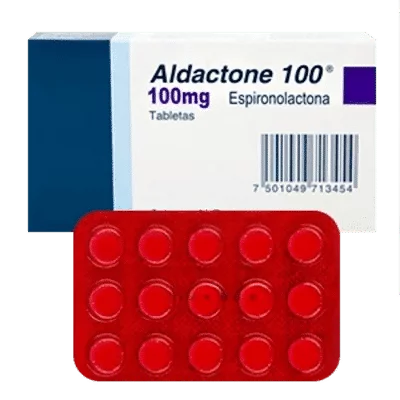
Aldactone is a potassium-sparing diuretic containing spironolactone. It is prescribed for adults who need treatment for fluid retention, heart failure, resistant hypertension, or excess aldosterone. By blocking aldosterone, it helps the body remove sodium and water while retaining potassium.
Description
Aldactone is a spironolactone tablet used to reduce fluid retention and treat conditions linked to excess aldosterone, including certain cases of heart failure and high blood pressure. Each tablet contains spironolactone, which helps the body remove sodium and water while retaining potassium. Spironolactone is a potassium-sparing diuretic and an aldosterone antagonist. The dose is stated on the pack — follow the leaflet.
Composition
Aldactone contains spironolactone per tablet. Spironolactone is a potassium-sparing diuretic and an aldosterone antagonist. Aldosterone is a hormone that tells the kidneys to retain sodium and water; spironolactone blocks this signal.
The result is less fluid accumulation and reduced strain on the heart and blood vessels. Unlike loop diuretics, spironolactone does not usually cause potassium loss. That benefit also explains its main safety issue: potassium can rise too high.
Dosage and usage
Aldactone tablets are taken orally. The prescribed daily dose depends on the condition being treated, kidney function, blood pressure, potassium level, and other medicines used at the same time. The dose is stated on the pack — follow the leaflet.
For some conditions, the stated dose may be the full daily dose. For others, clinicians may use a lower starting dose or divide the total daily dose. Heart failure treatment often starts at lower doses than treatment for primary hyperaldosteronism or marked oedema.
Take the tablet at the same time each day.
Swallow it with water.
It may be taken with food if stomach upset occurs.
Morning dosing is often more convenient when increased urination is noticeable.
Do not double the next dose after a missed tablet.
If a dose is missed, take it when remembered unless the next scheduled dose is close.
Aldactone is often taken for an extended period, depending on the reason for treatment. Blood pressure reduction may take time. Reduced swelling can appear sooner, yet the timing varies with the underlying condition and fluid intake.
Morning dosing can reduce the chance that increased urination interrupts sleep. If your prescriber has given different timing instructions, follow that schedule.
One common mistake is adding potassium supplements independently because the person assumes every diuretic lowers potassium. Aldactone does the opposite. Potassium supplements and potassium-based salt substitutes can create a dangerous rise in blood potassium.
How it works
Spironolactone works in the distal tubules of the kidneys. These are the parts of the kidney that fine-tune sodium, water, and potassium balance. By blocking mineralocorticoid receptors, Aldactone reduces aldosterone-driven sodium retention.
Less sodium stays in the body. Water follows sodium, so swelling and fluid pressure can reduce. Potassium is retained, which distinguishes spironolactone from diuretics such as furosemide.
In heart failure, aldosterone can contribute to fluid overload, fibrosis, and harmful changes in the heart muscle. The RALES trial found that adding spironolactone to standard treatment in severe heart failure reduced mortality and hospitalisation risk, though laboratory monitoring remained essential because potassium levels may rise [2].
Aldactone also has mild anti-androgen activity. This can help some women with acne or unwanted facial hair. It can also cause breast tenderness, menstrual changes, or reduced libido in some users.
Indications
Aldactone may be prescribed for:
Oedema linked to heart failure, liver cirrhosis, or kidney conditions
Heart failure with reduced ejection fraction
Resistant hypertension, when blood pressure stays high despite other medicines
Primary hyperaldosteronism
Low potassium caused by other diuretics
Hormonal acne or excess hair growth in women, when a clinician considers it appropriate
The FDA-approved prescribing information identifies hyperkalaemia, meaning high blood potassium, as the key dose-related risk of spironolactone treatment [1].
Aldactone is a tablet, not a rapid “water-loss” remedy. The intended effect is controlled reduction of excess fluid or aldosterone activity over time.
Comparison
Aldactone is chosen when aldosterone blockade or potassium conservation is clinically useful. The best alternative depends on whether the main target is fluid overload, resistant hypertension, heart failure, or hormonal symptoms.
Treatment approach
Main action
Practical difference
Spironolactone
Blocks aldosterone and retains potassium
Useful for aldosterone-related fluid retention, resistant hypertension, and selected heart failure
Loop diuretic
Promotes strong sodium and water removal
Often used for significant swelling; may lower potassium
Thiazide-type diuretic
Reduces sodium reabsorption in the kidney
Common for blood pressure control; may lower potassium and sodium
For resistant hypertension, spironolactone has strong evidence as an added treatment after standard blood-pressure medicines have not achieved control. In the PATHWAY-2 trial, spironolactone lowered home systolic blood pressure more than other add-on options in people with resistant hypertension [3].
The trade-off is monitoring. A loop diuretic may act more strongly for rapid fluid reduction, while Aldactone is more targeted toward aldosterone activity. Spironolactone can be a poor fit when potassium is already high or kidney filtration is severely reduced.
Contraindications
Aldactone is not for you if you have hyperkalaemia, Addison’s disease, or anuria, meaning the kidneys are not producing urine. It is also unsuitable when spironolactone has previously caused a serious allergic reaction.
Extra caution is required with impaired kidney function. The risk of potassium accumulation increases when kidney filtration is reduced, especially if Aldactone is combined with other medicines that raise potassium.
Do not combine Aldactone without prescriber approval with:
Lithium, because spironolactone can increase lithium exposure
Pregnancy planning also needs individual clinical review. Spironolactone’s anti-androgen activity raises concern for fetal development, so it is generally avoided in pregnancy unless a specialist determines otherwise.
The WHO Model List of Essential Medicines includes spironolactone for specific clinical uses, reflecting its established role when patients are selected and monitored appropriately [4].
When this is not for you
Aldactone may not be suitable if you have high potassium, severe kidney problems, Addison’s disease, or if your kidneys are not producing urine. Tell your prescriber if you have ever had a serious allergic reaction to spironolactone. Do not start potassium supplements, potassium-based salt substitutes, or interacting medicines without medical advice.
If you are planning a pregnancy or may be pregnant, discuss Aldactone with a clinician because its hormone-related activity may affect fetal development. Mention every regular medicine, including painkillers bought without prescription and potassium-containing supplements, before starting Aldactone.
Side effects
Most people tolerate spironolactone without severe problems when the dose and blood tests are managed carefully. Increased urination, dizziness, nausea, diarrhoea, abdominal discomfort, headache, and tiredness can occur.
The most clinically important adverse effect is hyperkalaemia. Mild hyperkalaemia may cause no obvious symptoms. Marked elevation can affect heart rhythm and may cause weakness, tingling, palpitations, or an irregular heartbeat.
Hormonal side effects can occur because spironolactone also interacts with androgen and progesterone receptors. These may include:
Breast tenderness or enlargement
Irregular periods or spotting
Reduced libido
Erectile difficulties
Testicular discomfort
Acne improvement in some women, with menstrual changes in others
Dizziness deserves attention. It can reflect reduced blood pressure, dehydration, or an interaction with another blood-pressure medicine. Standing up slowly is sensible during the first days of treatment or after a dose adjustment.
A potassium blood test is more informative than judging potassium status by symptoms. High potassium may be silent until it becomes serious.
Persistent vomiting, severe diarrhoea, marked weakness, fainting, very slow pulse, or palpitations need prompt medical assessment. These symptoms can signal dehydration, low blood pressure, or an electrolyte disturbance.
Common mistakes
Problems with spironolactone often come from interactions or incorrect assumptions, not from the tablet itself.
Using potassium supplements without medical direction
Switching to potassium-based salt substitutes for blood pressure control
Taking frequent ibuprofen, naproxen, or diclofenac without discussing it
Stopping the medicine suddenly after swelling improves
Ignoring new breast tenderness, menstrual changes, or erectile difficulties
Drinking excessive fluid to counter increased urination
Missing scheduled kidney-function and potassium tests
Taking an extra tablet after a missed dose
Another practical issue is weighing oneself inconsistently when Aldactone is prescribed for fluid retention. A sudden, sustained weight increase can be more meaningful than a single day of mild ankle swelling. Record weight under similar conditions, such as after waking and using the toilet.
Avoid salt substitutes marketed as lower-sodium options unless their potassium content has been reviewed. Many replace sodium chloride with potassium chloride.
What doctors say
In clinical practice, doctors usually view Aldactone as a targeted medicine rather than a general diuretic. It is valuable when aldosterone is part of the problem: resistant blood pressure, fluid retention with heart failure, or primary hyperaldosteronism are common examples.
Doctors usually set expectations around monitoring from the beginning. Kidney function and potassium testing are not administrative extras. They determine whether the medicine remains appropriate at the current dose.
A useful clinical observation is that swelling and body weight can improve while potassium rises without symptoms. That is why feeling well does not replace scheduled blood tests. NAFDAC medicines oversight and the broader safety standards used by bodies such as the EMA support the same principle: benefit and monitoring must travel together.
Aldactone can be very helpful, but it is not the preferred option for every type of swelling. Swelling caused by a blood clot, severe infection, or untreated venous disease needs the underlying cause addressed rather than automatic diuretic use.
Frequently asked questions
How quickly does Aldactone start working?
Aldactone begins affecting kidney sodium handling after it is absorbed, yet the noticeable benefit depends on the condition. Increased urination can occur within days, while blood-pressure or heart-failure benefits may build over several weeks. The 2023 FDA prescribing information describes spironolactone as an aldosterone antagonist with effects that require dose selection and laboratory follow-up. Do not increase the dose because early results seem slow.
Can Aldactone cause high potassium?
Yes. High potassium is the main safety concern with spironolactone, especially in people with kidney impairment or those taking ACE inhibitors, angiotensin receptor blockers, potassium supplements, or certain antibiotics. Symptoms may include weakness, tingling, nausea, palpitations, or an irregular heartbeat, though some people have no symptoms. WHO guidance from 2023 on essential medicines recognises spironolactone’s place in treatment while clinical use requires appropriate monitoring. Blood tests are the reliable way to detect this problem.
Can I take Aldactone with food?
Aldactone tablets can be taken with food if this improves stomach comfort. Taking it consistently in relation to meals can make the routine easier to maintain. Food does not remove the need to monitor potassium or kidney function. The 2023 FDA label advises clinicians to consider interacting medicines and electrolyte status throughout treatment.
Is Aldactone used for resistant high blood pressure?
Yes, spironolactone is widely used as an add-on treatment for resistant hypertension after standard medicines have not provided adequate control. The PATHWAY-2 study, published in The Lancet in 2015, found spironolactone more effective than several alternative add-on strategies for home blood-pressure reduction . It is not automatically suitable for every person with high blood pressure. Potassium and kidney function guide whether it can be used safely.
Can men take Aldactone?
Men can take Aldactone for heart failure, fluid retention, high blood pressure, and hyperaldosteronism when prescribed. Spironolactone may cause breast enlargement, breast tenderness, reduced libido, or erectile difficulties because of its hormone-related effects. These effects are dose-related in some patients and should be reported rather than silently tolerated. FDA safety information from 2023 lists gynaecomastia among recognised adverse reactions.
What tests are needed during Aldactone treatment?
Clinicians commonly assess potassium and kidney function before treatment and again after starting or changing the dose. Blood pressure, body weight, ankle swelling, and symptoms of dehydration may also be reviewed. NICE guidance from 2018 on chronic heart failure includes mineralocorticoid receptor antagonists within monitored treatment pathways because renal function and potassium can change during therapy [5]. The frequency of testing depends on the indication, dose, age, kidney health, and other medicines.
Do you offer anonymous delivery?
Your order will be securely packed and shipped within 24 hours. This is exactly what your package will look like (images of an actual item sent). It has the size and look of a regular private letter (24x11x0.7 cm) and its contents cannot be seen.
My ankle swelling reduced gradually rather than overnight. I was urinating more during the first week, so I moved the tablet to breakfast time. The follow-up blood test was normal, and I felt less breathless walking upstairs.
1 Mar 2025
I
Ifeoma, 44
Abuja
One month
Verified
Rating: 3.5 out of 5
It was added after my blood pressure stayed high on my other medicines. My readings improved, but I felt light-headed twice when standing quickly. The dose timing was adjusted after my appointment.
22 Feb 2025
T
Tunde, 32
Port Harcourt
Eight weeks
Verified
Rating: 3.5 out of 5
I used it for hormonal breakouts. The acne on my jawline became calmer after about six weeks. I had spotting in the second month, which was annoying, but it settled after treatment was reviewed.
11 Feb 2025
S
Sade, 60
Ibadan
Three weeks
Verified
Rating: 3 out of 5
The leg swelling improved, but my potassium result was high at the first check. My clinician changed the plan, and I stopped using the salt substitute I had started at home.
1 Feb 2025
Sources
U.S. Food and Drug Administration (2023). Aldactone (spironolactone) prescribing information.
The Randomized Aldactone Evaluation Study Investigators (1999). The effect of spironolactone on morbidity and mortality in patients with severe heart failure.
The Lancet (2015). Spironolactone versus placebo, bisoprolol, and doxazosin to determine the optimal treatment for drug-resistant hypertension (PATHWAY-2).
World Health Organization (2023). WHO Model List of Essential Medicines.
National Institute for Health and Care Excellence (2018). Chronic heart failure in adults: diagnosis and management (NG106).