Verified
I used a very thin layer after cooling the burn under running water. The stinging eased after the first day, and the brown colour made it easy to see where I had applied it. I stopped once the skin had closed.
12 Oct 2025

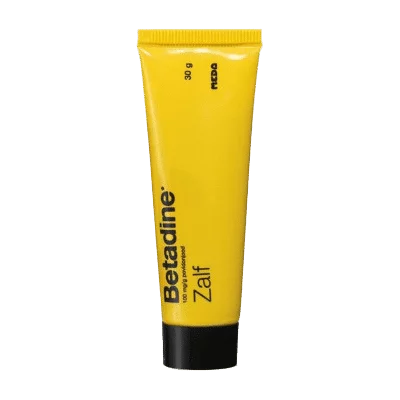
Betadine is a povidone-iodine cream for local care of minor superficial skin damage. It is intended for people needing short-term antiseptic treatment of small cuts, grazes, or minor burns. Its iodine action reduces a broad range of microbes on the treated skin surface.
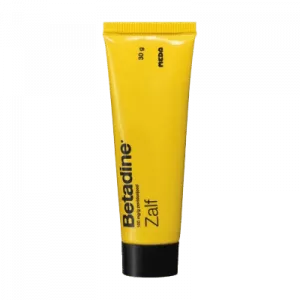
Betadine is a topical antiseptic cream supplied in a 30 g tube. It contains povidone-iodine, an iodine-releasing topical antiseptic.
Betadine contains povidone-iodine, an iodine-releasing topical antiseptic. Povidone acts as a carrier that releases iodine gradually after the cream reaches moist skin or wound fluid. The active iodine disrupts microbial proteins and cell structures, which is why povidone-iodine has activity against many bacteria, fungi, and viruses on the skin surface [1].
This cream is for external application.
A cream base is useful on dry or irritated skin because it spreads in a thin layer without the repeated rubbing that can sting a fresh graze.
Apply Betadine externally in a thin, even layer over the affected superficial area. Avoid vigorous rubbing, since friction can reopen delicate skin around a graze or minor burn.
Do not use it in the eyes, mouth, nose, or deep body cavities.
A missed application does not require extra cream later. Resume the normal application routine when needed. Applying a much thicker layer does not make the antiseptic action stronger and can make the skin feel sticky or irritated.
Povidone-iodine works locally rather than travelling through the bloodstream to treat an infection elsewhere in the body. Once applied, iodine is released at the skin surface and attacks several microbial targets at once. This multi-target action differs from antibiotics, which usually act on selected bacterial structures. It acts where it is applied. It does not replace wound assessment.
Betadine does not close a wound or rebuild damaged tissue. Its role is to lower the surface microbial burden during early care of a small, uncomplicated skin injury.
The Cochrane review of antiseptics for burns found that evidence varies by wound type and product, so antiseptic use should match the type and extent of skin damage rather than become a routine response to every wound [2].
It is commonly used for small cuts, grazes, minor burns, cracked skin, and other limited superficial areas where keeping the site clean matters.
Betadine is one option for short-term antiseptic care of minor superficial skin damage. The best approach depends on whether the priority is cleaning, protecting intact skin, or treating an established infection.
| Approach | Main role | Limitation |
|---|---|---|
| Betadine with povidone-iodine | Broad topical antiseptic action for limited superficial areas | May sting or irritate sensitive skin |
| Plain water and gentle cleansing | Removes dirt and loose debris | Does not provide ongoing antiseptic action |
| Prescription topical antibiotic | Treats selected bacterial skin infections | Not suitable for routine use on every small cut |
For a clean, small scrape, careful rinsing and protection may be enough. Betadine is most useful when an antiseptic cream is suitable for the affected area. A spreading, painful, or pus-producing skin problem may need medical assessment instead of repeated antiseptic application.
Betadine is not for you if you have had an allergic reaction to povidone-iodine or another iodine-containing topical treatment.
Use should also be avoided or discussed with a clinician before use in these situations:
Do not combine povidone-iodine with mercury-containing topical products. The combination may damage skin and is not used in modern wound care.
Avoid self-treating large burns, deep puncture wounds, animal bites, heavily contaminated wounds, or wounds with embedded material. These injuries may need cleaning, tetanus assessment, closure, or treatment beyond a topical antiseptic.
Most people tolerate short-term, limited-area use well. Mild burning, warmth, redness, dryness, or temporary staining may occur after application. A brief sting on broken skin can happen, especially during the first application.
Stop using Betadine if redness expands beyond the treated area, itching becomes intense, swelling develops, or a rash appears. These signs can indicate local irritation or sensitivity to povidone-iodine or another cream component.
Severe allergic reactions are rare, yet urgent help is needed for facial swelling, breathing difficulty, widespread hives, or faintness after application.
Large-area or repeated long-term use creates a different concern. Iodine can be absorbed through damaged skin, especially under an airtight dressing, and this may affect thyroid function in susceptible people. The European Medicines Agency identifies iodine exposure as clinically relevant for people with thyroid disease and for newborns, whose thyroid systems are more sensitive [3].
The most frequent mistake is using an antiseptic cream on a wound that needs medical treatment. Deep wounds and bites can look small at the surface while extending further into tissue.
Another mistake is applying Betadine repeatedly for many days to a broad area of broken skin. More product is not better when the skin is already inflamed or fragile.
People also sometimes cover a freshly treated area with a tightly sealed dressing. This traps moisture and can soften the surrounding skin until it breaks down.
Using it for acne, fungal nail disease, or recurrent unexplained rashes is also a poor fit. Those conditions need a cause-specific approach.
Do not apply Betadine near the eyes.
In clinical practice, doctors usually view a product such as Betadine as a short-term skin antiseptic, not as a treatment for every wound problem. It can be useful after sensible cleaning of a minor cut or abrasion, yet it cannot resolve an abscess, a deep infection, poor circulation, or a wound caused by diabetes-related nerve damage.
The expected result is modest: the treated surface is kept cleaner while normal skin healing progresses. Pain should gradually settle, and the wound edges should not become increasingly red or swollen.
A clinician would be more concerned if pain increases after the first day, redness spreads, the site feels hot, pus appears, or fever develops. Those changes point beyond simple superficial skin care.
Betadine can be used externally on a small, superficial cut after visible dirt has been gently rinsed away. Apply a thin layer rather than filling the cut with cream. The 2019 World Health Organization Model List includes povidone-iodine among widely used antiseptic options for skin and wound-related care, though wound management still depends on injury depth and contamination. Seek urgent assessment for deep cuts, uncontrolled bleeding, bites, or wounds with numbness around the area.
Betadine may be appropriate for a minor superficial burn after the area has been cooled with cool running water. It should not be used as a substitute for assessment of a large, blistering, chemical, electrical, or facial burn. Evidence reviewed by Cochrane in 2022 shows that burn treatments need to be selected by burn severity and healing stage rather than by antiseptic use alone . Avoid peeling blisters or applying cream to a burn that requires urgent medical care.
Betadine is best suited to short-term local use while a minor superficial injury settles. Stop when the skin has healed or when ongoing application no longer has a clear purpose. If there is no improvement after several days, or the condition worsens, the problem may not be suitable for antiseptic self-care. The EMA’s 2019 iodine-related guidance supports limiting unnecessary iodine exposure, especially on damaged skin or large areas.
A clean, loose, non-stick dressing can protect a treated minor wound from friction and dirt. Change the dressing when it becomes wet, dirty, or stuck to the skin. Do not create a tightly sealed, heavily cream-coated covering over large areas, because moisture and iodine absorption can increase. NICE’s 2020 wound-care guidance emphasises clean technique and selecting dressings according to the wound’s condition [4].
People with thyroid disease should avoid repeated, extensive, or prolonged use unless a clinician has advised it. Iodine absorbed through damaged skin may alter thyroid activity, and the risk is greater with large treated areas or occlusive dressings. This matters for people with hyperthyroidism, thyroid nodules, or those taking lithium. The EMA discussed these iodine-related precautions in its 2019 assessment of povidone-iodine-containing medicines .
Small, limited-area use may be appropriate for an older child when an antiseptic cream is needed for a minor skin injury. Infants and newborns require more caution because their skin absorbs topical substances more readily and their thyroid function is more vulnerable to iodine exposure. NAFDAC’s 2021 guidance advises that medicines for children should be used according to age-appropriate directions and professional advice when risk factors are present [5]. Large wounds, burns, persistent rashes, or signs of infection in a child need prompt assessment.
Your order will be securely packed and shipped within 24 hours. This is exactly what your package will look like (images of an actual item sent). It has the size and look of a regular private letter (24x11x0.7 cm) and its contents cannot be seen.
