Verified
I started after completing detoxification. The first week brought a metallic taste and some tiredness, but it settled. Knowing that drinking would make me ill helped me avoid the usual evening routine.
16 May 2025

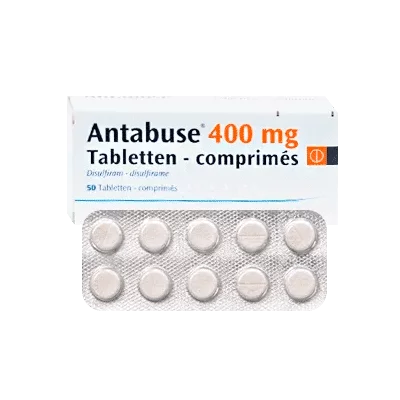
Antabuse is a disulfiram tablet for adults with alcohol dependence who have chosen to remain alcohol-free. It supports abstinence by blocking alcohol breakdown and causing an unpleasant reaction if alcohol is consumed.
Antabuse is a tablet. The dose is stated on the pack — follow the leaflet. It belongs to the alcohol-sensitising medicines used in the management of alcohol dependence.
Antabuse contains disulfiram. The dose is stated on the pack — follow the leaflet. It belongs to the alcohol-sensitising medicines used in the management of alcohol dependence. The pack contains 50 tablets in blister packaging.
Disulfiram does not reduce intoxication or make drinking safer. Its purpose is different: it supports abstinence by making alcohol consumption predictably unpleasant. This works best when treatment is agreed with a clinician and paired with counselling, relapse-prevention work, or structured addiction support.
Alcohol dependence is a medical condition involving brain reward pathways, learned routines, withdrawal symptoms, and social triggers. Antabuse addresses only one part of that picture: the decision to avoid alcohol.
Antabuse tablets are taken by mouth under an individual treatment plan. The dose is stated on the pack — follow the leaflet. The prescriber determines the number of tablets, timing, and duration according to alcohol history, liver health, previous reactions, and adherence support.
A common mistake is treating Antabuse as a tablet that can be taken only on high-risk social days. The medication works most reliably when it is part of a consistent plan. Another mistake is testing the reaction with a small drink. Even a modest amount of alcohol can produce severe symptoms.
Disulfiram blocks the breakdown of alcohol, causing an intermediate product to accumulate when alcohol is consumed. This produces the unpleasant disulfiram–alcohol reaction that supports abstinence. The effect is physiological and deterrent-based rather than a reduction of intoxication or a direct treatment of alcohol craving.
Antabuse is intended for adults with alcohol dependence who have chosen abstinence and can avoid alcohol completely. It is usually introduced after alcohol withdrawal has been addressed and after a clinician has assessed physical and mental health. WHO guidance published in 2010 describes alcohol dependence as a condition that benefits from psychosocial care alongside medical treatment. Antabuse is most useful when regular follow-up and relapse-prevention support are in place.
Several medicines can support alcohol-dependence treatment, yet their goals differ. Choice depends on whether the main challenge is avoiding alcohol completely, reducing heavy drinking, maintaining abstinence after detoxification, or managing coexisting medical conditions.
| Treatment approach | Main mechanism | Typical clinical role |
|---|---|---|
| Disulfiram in Antabuse | Blocks aldehyde dehydrogenase; alcohol causes acetaldehyde accumulation | Supports planned abstinence when the person is committed to avoiding alcohol |
| Naltrexone | Reduces opioid-mediated reward from alcohol | May help reduce heavy drinking and craving |
| Acamprosate | Modulates glutamate and GABA signalling | Helps maintain abstinence after alcohol withdrawal |
Antabuse can be a good fit for someone who wants a firm external barrier against drinking and has reliable support. It may be less suitable when alcohol use is unpredictable, when a person cannot avoid alcohol-containing products, or when cognitive impairment makes adherence difficult.
NICE guidance places disulfiram among medicine options for alcohol dependence after assessment, with treatment selected according to the person’s goals, medical history, and level of support. [1]
Antabuse should not be used by people with:
Disulfiram can interact with several medicines. It may increase the effects of warfarin, phenytoin, some benzodiazepines, tricyclic antidepressants, and certain medicines processed by liver enzymes. Metronidazole combined with disulfiram may cause confusion or psychotic reactions.
Pregnancy, breastfeeding, diabetes, epilepsy, kidney disease, thyroid disease, and liver disease require an individual medical assessment before Antabuse is chosen.
This medication is NOT for you if you are unable to avoid alcohol completely, including alcohol in medicines, foods, or personal-care products.
The World Health Organization and the National Institute on Alcohol Abuse and Alcoholism identify alcohol-use disorders as health conditions requiring structured assessment and treatment rather than willpower alone. [2]
Some people tolerate Antabuse well, while others experience bothersome effects during the first days or weeks. Common effects can include drowsiness, headache, tiredness, metallic or garlic-like taste, acne-like skin eruptions, rash, and reduced libido.
A metallic taste can be annoying. It often becomes less prominent with continued use.
More serious effects are uncommon but need fast recognition. Stop the medicine and seek urgent medical assessment for yellowing of the skin or eyes, dark urine, persistent upper abdominal pain, marked loss of appetite, severe weakness, visual disturbance, numbness or tingling in the hands or feet, confusion, or major mood changes. These may indicate liver injury, neuropathy, optic inflammation, or psychiatric effects.
Liver function assessment is usually performed before treatment and repeated during early treatment, because disulfiram-related hepatitis can occur even without alcohol exposure. People with pre-existing liver disease require closer clinical judgment.
The disulfiram–alcohol reaction is the most important tolerability issue. It is not a mild hangover. Fast heartbeat, breathing difficulty, chest pain, fainting, collapse, seizures, and abnormal heart rhythm can occur in severe cases.
Several avoidable errors can make Antabuse treatment more difficult or dangerous.
In addiction practice, clinicians tend to view Antabuse as a commitment-support medicine rather than a stand-alone solution. It can be useful when a person has a clear abstinence goal, understands the alcohol reaction, and has regular follow-up.
Supervised dosing may improve adherence for some people. This can involve a trusted family member or a treatment professional, where appropriate and agreed by the patient. The medicine is less likely to help if tablets are taken inconsistently or stopped before situations associated with drinking.
Doctors also look beyond alcohol intake. Sleep problems, anxiety, depression, pain, trauma symptoms, and social pressure can all drive relapse. Addressing those factors gives Antabuse a better chance of helping.
A 2014 meta-analysis found that disulfiram showed stronger results in open-label and supervised settings than in blinded trials, which reflects the importance of expectancy, adherence, and support in real-world use. [3]
Antabuse is intended for adults with alcohol dependence who have chosen abstinence and can avoid alcohol completely. It is usually introduced after alcohol withdrawal has been addressed and after a clinician has assessed physical and mental health. WHO guidance published in 2010 describes alcohol dependence as a condition that benefits from psychosocial care alongside medical treatment. Antabuse is most useful when regular follow-up and relapse-prevention support are in place.
A minimum alcohol-free period of 12 hours is required before the first dose. People who have consumed large amounts of alcohol may need longer, because alcohol can remain in the body after the feeling of intoxication has passed. The FDA Antabuse prescribing information, issued in 2012, warns that taking disulfiram with alcohol can produce a severe reaction. The starting decision should be based on clinical assessment, not guesswork.
No alcohol should be consumed for 14 days after the final dose. Disulfiram’s enzyme-blocking action can persist after treatment stops, so a reaction may occur even when tablets are no longer being taken. The FDA documented this prolonged alcohol sensitivity in its 2012 prescribing information. This includes alcohol found in liquid medicines and some personal-care products.
Antabuse does not directly treat cravings in the same way as naltrexone may. It creates a deterrent by causing acetaldehyde accumulation when alcohol is consumed. NICE clinical guidance, updated in 2014, presents disulfiram as one option within a broader alcohol-dependence treatment plan. Counselling and trigger-management strategies remain valuable when cravings are strong.
The reaction may begin with flushing, headache, nausea, sweating, and palpitations. It can progress to vomiting, chest pain, low blood pressure, breathing difficulty, confusion, collapse, or abnormal heart rhythm. The FDA's 2012 prescribing information warns that severe disulfiram–alcohol reactions require urgent medical assessment. Urgent medical attention is needed for severe symptoms.
Metronidazole should not be combined with disulfiram. The combination can cause confusion, agitation, and psychotic reactions in some people. The FDA’s 2012 prescribing information lists metronidazole among the medicines that require avoidance with Antabuse. Tell the clinician treating an infection that disulfiram is part of your medication plan.
Your order will be securely packed and shipped within 24 hours. This is exactly what your package will look like (images of an actual item sent). It has the size and look of a regular private letter (24x11x0.7 cm) and its contents cannot be seen.
