Verified
I used Xenoprost Active mainly for frequent night urination and that heavy feeling after sitting long. By week three I slept better, and the pressure reduced. No miracle change, just steady improvement.
28 Apr 2026

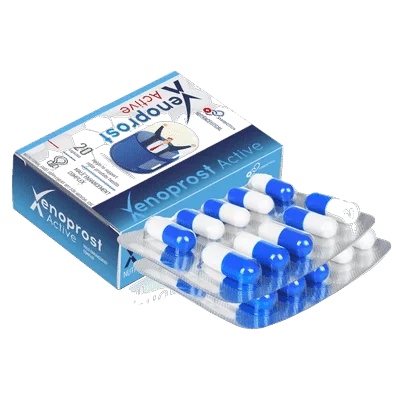
Xenoprost Active is an oral supplement capsule with plant sterols and antioxidant nutrients. It is for men seeking support for prostate comfort, urinary wellbeing, and sexual performance. It works by supporting normal inflammatory balance and protecting tissues from oxidative stress.
Xenoprost Active (also described online as Xenoprost Active Capsule) is a men’s health supplement focused on prostate support and immune defence. In day-to-day pharmacy counselling, products in this category are most often used as supportive care for men with recurring prostate discomfort patterns, including symptoms linked to prostatitis.
Xenoprost Active Capsule is positioned to treat prostatitis and prevent prostatitis as part of a broader prostate-care routine, and it is also promoted for strengthening male immunity.
Xenoprost Active Capsule contains Bitasitesterol, Lycopene, Vitamin C (Ascorbic Acid), Vitamin E (D-alpha tocopherol), Vitamin K, Vitamin B1 (Thiamine hydrochloride), Vitamin B2 (Riboflavin), Vitamin B12 (Manganese sulphate), Folic Acid (Dietary Folate), and Manganese (Manganese sulphate). This mix targets three pillars: prostate support, antioxidant protection, and nutrient support for immunity and reproductive function.
| Ingredient | Main role in the body | Why it’s used in Xenoprost Active Capsule |
|---|---|---|
| Bitasitesterol; Lycopene | Plant sterol support; carotenoid antioxidant | Prostate-focused support and oxidative stress control associated with prostate comfort and semen quality |
Use Xenoprost Active consistently, at the same time each day, since nutrient-based support is gradual rather than immediate. Because it is supplied as capsules in a blister, swallowing the capsule whole with water is the standard method of use.
Xenoprost Active is used for more than one goal, so it helps to match the benefit to your main complaint. Some benefits are about prostate comfort, others are about general resilience.
A real limitation: supplements can support function, yet they do not replace antibiotics for bacterial prostatitis or urgent medical assessment for red-flag urinary symptoms.
Xenoprost Active Capsule is commonly presented as supportive care across several men’s health concerns. Some of these uses are “support” claims rather than guaranteed treatment outcomes, so it helps to keep expectations realistic.
One sentence that matters: new urinary retention, blood in urine, fever, or severe pelvic pain should be treated as urgent symptoms, even if you also plan to use a supplement.
Xenoprost Active Capsule is positioned to improve sexual ability, prevent premature ejaculation, improve sperm quality, improve sperm motility, and promote pregnancy. Those are ambitious targets, so the most realistic way to understand the “how” is to connect each claim to a pathway the ingredients can plausibly support.
Antioxidants like lycopene, Vitamin C (Ascorbic Acid), and Vitamin E (D-alpha tocopherol) help reduce oxidative stress, which is one factor that can affect sperm quality and sperm motility. Micronutrients such as folate and B-vitamins support normal cell division and energy metabolism, which can matter for reproductive health in men trying to conceive. Bitasitesterol (a plant sterol) is often used in prostate-support formulas; improved prostate comfort can indirectly improve sexual confidence and reduce performance-disrupting pelvic discomfort.
Xenoprost Active Capsule is promoted as providing relief from phimosis, and the claim is usually framed around improved skin elasticity and tissue resilience. Nutrients that support collagen formation (Vitamin C) and protect skin lipids from oxidation (Vitamin E) may support healthier skin texture over time, which can be helpful for mild tightness and dryness.
Phimosis still has clear first-line approaches in urology, including topical therapies and gentle stretching protocols when appropriate. Severe pain, tearing, recurrent infection, or ballooning during urination are signs to prioritise a clinical assessment rather than relying on supplements alone. [1]
Xenoprost Active Capsule is promoted to improve skin elasticity and prevent age related wear and tear. The most plausible driver is antioxidant support: lycopene, Vitamin C (Ascorbic Acid), and Vitamin E (D-alpha tocopherol) reduce oxidative stress that contributes to collagen breakdown and skin barrier changes.
In practice, men who notice a “skin” benefit from antioxidant supplements usually describe subtle changes—less dryness, better texture, fewer irritation flares—rather than a dramatic cosmetic shift. Hydration, smoking status, and chronic inflammation make a bigger difference than any capsule can, so this benefit tends to be secondary to prostate or fertility goals.
Xenoprost Active and Xenoprost Active Capsule refer to the same product name used in capsule form. On this page, Xenoprost Active is supplied as capsules (blue and white) in blisters, so the “Capsule” wording simply describes the dosage form rather than a different medicine.
Xenoprost Active Capsule is a nutrient-and-plant-sterol supplement, so side effects tend to be mild, yet they can still happen. The most common issues reported with similar formulas are stomach upset, nausea, loose stools, reflux, or a “vitamin” taste after swallowing. Headache can occur in sensitive users, often linked to taking capsules on an empty stomach.
A real drawback is expectation mismatch: if symptoms are driven by infection, urinary obstruction, uncontrolled diabetes, or medication side effects, a supplement may do very little until the primary cause is treated. Also, high-dose antioxidant supplementation is not automatically better; more is not always more in nutrition science. WHO guidance on safe use of supplements and micronutrients stresses staying within established tolerable upper limits where they exist. [2]
Most “it didn’t work” stories come down to avoidable patterns.
Doctors who manage prostatitis-like symptoms usually split patients into two broad groups: men with a clear infectious episode, and men with chronic pelvic pain/prostate discomfort where inflammation, muscle tension, and stress can overlap. In the second group, clinicians often allow antioxidant-and-sterol supplements as adjuncts, alongside hydration, pelvic floor strategies, and addressing triggers, because the risk profile is usually low when interactions are screened.
Urologists also tend to be blunt about cancer claims: lycopene and antioxidants are reasonable for general health, yet they are not a substitute for PSA-based assessment or symptom-led evaluation when indicated. Guidance documents used in Europe stress that persistent lower urinary tract symptoms need structured assessment, since symptoms overlap between prostatitis, benign prostatic hyperplasia, and other causes. [3]
For prostate comfort goals, men usually judge Xenoprost Active after 2–4 weeks of consistent use, since nutritional support is gradual rather than immediate. For sperm quality and sperm motility goals, a fair trial is closer to 8–12 weeks because spermatogenesis runs on a longer cycle. If symptoms worsen quickly or include fever or urinary retention, that pattern needs urgent assessment rather than waiting. In 2026, WHO nutrition guidance continues to frame supplements as supportive, not rapid-acting treatment.
Xenoprost Active Capsule is promoted to treat prostatitis and prevent prostatitis, usually as supportive care for prostate comfort and inflammatory balance. Prostatitis has different types, including bacterial and non-bacterial forms, and the treatment approach differs. Supplements may fit better as adjuncts for chronic discomfort patterns than as standalone care for acute infection. In 2026 clinical practice, clinicians still prioritise diagnosis because symptoms overlap with other urinary conditions, as reflected in EMA-referenced care pathways used across Europe.
Xenoprost Active Capsule is promoted to improve sperm quality and improve sperm motility, and the antioxidant ingredients give a plausible biological basis for that goal. Oxidative stress is one recognised contributor to sperm damage, and nutrients like Vitamin C, Vitamin E, folate, and lycopene are commonly used in male fertility support. The key is timeline: changes tied to sperm parameters usually take a couple of months. In 2025–2026 evidence summaries in peer-reviewed and indexed nutrition literature continue to support antioxidants as a reasonable option for selected men, with mixed results depending on baseline deficiency and underlying causes. [4]
Caution is needed if you use warfarin or other anticoagulants affected by Vitamin K, because Xenoprost Active Capsule contains Vitamin K. The concern is not “danger from one capsule” but anticoagulation stability over time, which can shift INR control in some patients. A prescriber may decide you can still use it, but INR monitoring plans may need adjustment. In 2026, NAFDAC medicine-safety communications and global best practice continue to emphasise interaction screening for supplements that contain vitamins and trace minerals. [5]
Xenoprost Active Capsule is promoted as providing relief from phimosis, and the most sensible interpretation is supportive skin and tissue nourishment over time. Vitamins C and E are linked with collagen support and protection from oxidative stress, which can matter for skin texture. Phimosis can also be anatomical or inflammatory, and moderate-to-severe cases may need topical therapy or urology management. EMA-aligned patient-care pathways used in Europe treat persistent symptoms as a reason for assessment rather than self-management alone.
Daily use is a common pattern for nutrient-based supplements, since benefits depend on consistent intake rather than “as needed” dosing. The main guardrails are avoiding unnecessary dose stacking with other high-dose vitamin products and screening for interactions like Vitamin K with anticoagulants. If you have chronic conditions (liver disease, kidney disease, clotting disorders), it is sensible to keep supplementation coordinated with your routine care. WHO guidance in 2026 still positions supplements as a way to support health when chosen appropriately, not as a substitute for diagnosis or treatment.
