
Verified
Night-time urination dropped from about 3 times to 1–2 most nights by week five. I had mild heartburn the first week until I started taking it after lunch.
21 May 2026

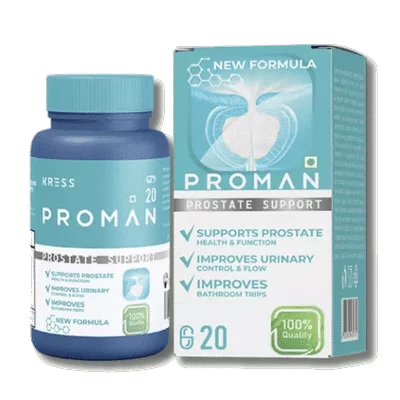
Proman is an oral capsule dietary supplement for prostate support. It is for adult men seeking day-to-day help with prostate function as they age. It combines saw palmetto with micronutrients to support urinary comfort and antioxidant and inflammatory balance.
Proman is a men’s health supplement formulated to support prostate health and urinary comfort. It is intended for adult men who want nutritional support for prostate function as they age. The formula focuses on plant extracts and key micronutrients that help maintain normal inflammatory balance and antioxidant protection in prostate tissue.
Proman combines a prostate-focused botanical with micronutrients that support normal hormone metabolism, immune function, and antioxidant defence.
Saw palmetto is one of the best-known botanicals used for benign prostatic hyperplasia (BPH)-type urinary symptoms. The proposed actions include inhibition of 5‑alpha‑reductase activity and local anti-inflammatory effects in prostate tissue, which can translate into urinary comfort for some men. Evidence is mixed across trials and products, and benefit tends to be modest rather than dramatic. [1]
Zinc contributes to normal testosterone metabolism, normal immune function, and protection of cells from oxidative stress. The prostate has a high zinc concentration compared with many other tissues, so zinc adequacy matters. Too much zinc can upset the stomach and can interfere with copper absorption when taken at high doses for long periods. [2]
Curcumin is studied for anti-inflammatory and antioxidant actions. In prostate support formulas, the goal is usually to help maintain a healthier inflammatory balance in the lower urinary tract. Absorption varies widely between products; taking curcumin with a meal that contains some fat can improve uptake for many people.
These vitamins support antioxidant systems (C and E), normal blood clotting (K), and energy metabolism and nerve function (B1). The prostate-health role is mostly supportive, not a direct “shrink the prostate” effect.
A real limitation: supplements can support function, yet they do not work like prescription BPH medicines, and they do not act fast.
Proman is taken by mouth as capsules. A consistent daily routine tends to work better than on-and-off use, since botanical and nutrient effects build gradually.
A practical way many men use Proman:
If you miss a dose, take the next dose at your usual time. Do not double up.
Proman is used for supportive care in men who want to maintain prostate function and urinary comfort. The most realistic benefits are gradual and linked to consistent use.
Potential benefits men aim for with Proman include:
Expectations matter. Results, when they happen, are usually incremental.
This is a supplement, not a rapid symptom stopper.
Proman sits in the “nutritional support” category. Alternatives for bothersome urinary symptoms range from lifestyle measures to prescription medicines used for BPH.
| Option type | What it does | Best fit |
|---|---|---|
| Proman (supplement) | Supports prostate function with botanicals + micronutrients | Mild symptoms, maintenance, men who want a non-prescription approach |
| Alpha‑1 blockers (prescription) | Relax prostate/bladder neck muscles to improve urine flow | Faster symptom relief when symptoms are moderate to severe |
| 5‑alpha‑reductase inhibitors (prescription) | Reduce DHT to shrink prostate over months | Men with enlarged prostate size who need long-term reduction |
Avoid Proman if you cannot tolerate saw palmetto or turmeric/curcumin, or if you have reacted to similar herbal capsules before. It may be a poor fit if you use warfarin or other blood thinners and your clotting tests are sensitive to diet and supplements, because vitamin K changes can disrupt stability. Pause and ask your clinician if you are heading into surgery or have bleeding concerns, and do not use it for children or teenagers.
Most men tolerate Proman well, yet side effects can happen because botanicals and minerals still have biological activity.
More common side effects
Less common but important precautions
A practical limitation: if your urinary symptoms are driven by a significant obstruction, a supplement may not be enough, and delaying assessment can prolong discomfort.
This is where men lose weeks of progress, or blame the product unfairly.
Taking capsules on an empty stomach is a common trigger for nausea and reflux, especially when formulas include zinc. Some men stop after a few days because of stomach burn, then conclude it “didn’t suit them,” when food timing was the issue.
Mixing multiple prostate supplements at once is another pattern I see. It can push zinc too high, duplicate botanicals, and make side effects harder to trace. Keep it simple for the first month.
Late-evening dosing can backfire for men who already wake to urinate. If your routine allows, morning or lunchtime dosing often fits better with symptom patterns.
One more mistake is ignoring constipation. A full rectum can worsen urinary hesitancy and frequency by mechanical pressure, so hydration and fibre can matter as much as any capsule.
In day-to-day clinical practice, doctors tend to separate prostate support into three lanes: symptom relief, reduction of prostate size, and ruling out red flags. Proman fits the support lane, so it often suits men with mild symptoms who want a non-prescription approach first, or men already on lifestyle measures who want added nutritional support.
Urologists also watch for “silent” drivers of urinary symptoms. Poor sleep, excess evening fluids, alcohol, uncontrolled diabetes, and constipation can mimic BPH and limit what any supplement can achieve. When those drivers are addressed, men often report a clearer signal on whether a product like Proman helps.
One more observation you’ll hear from clinicians: if symptoms improve, it is usually gradual and measurable, not sudden. If symptoms worsen quickly, clinicians think about infection, urinary retention, or other pathology rather than blaming a supplement.
Most men who notice a benefit describe a gradual change over a few weeks, rather than a same-day effect. Botanical support for urinary comfort is usually assessed after consistent daily use, since symptom patterns fluctuate week to week. If you want a structured checkpoint, reassess at week 4 and week 8 with the same symptom notes. EMA guidance on lower urinary tract symptom management emphasises measuring symptom burden over time, not relying on day-to-day impressions.
Proman can support prostate health, yet it does not replace prescription therapies when symptoms are moderate to severe, or when there is urinary retention risk. Prescription medicines can act through defined mechanisms (muscle relaxation or hormonal reduction), which can be more predictable for symptom control. A reasonable approach is to use Proman as supportive care when symptoms are mild, while keeping medical review in view if symptoms progress. NAFDAC’s 2026 public health messaging on supplements aligns with using supplements as support rather than as substitutes for indicated treatment.
Many men combine supplements with chronic medicines without issues, but interactions depend on your exact regimen. The two main points to think about are bleeding risk (vitamin E with antiplatelets/anticoagulants) and INR stability (vitamin K with warfarin). If you are on multiple long-term medicines, keep your supplement routine stable and avoid adding several new products at once. WHO medication safety materials in 2025–2026 stress avoiding untracked polypharmacy, including supplements, because it complicates side-effect attribution.
It can be, since night-time urination is a common reason men try prostate support. Still, nocturia is not always prostate-driven; late fluids, alcohol, sleep apnoea, and poorly controlled blood sugar can all contribute. A simple test is moving most fluids earlier in the day and limiting drinks for 2–3 hours before bed, then seeing what remains. If nocturia is severe or paired with leg swelling or breathlessness, medical assessment matters because heart and kidney causes need different care. EMA clinical references on LUTS also highlight checking non-prostate contributors when nocturia dominates.
Supplements do not replace PSA testing, and PSA interpretation depends on trends and clinical context. Some prostate-related interventions can shift PSA values, so consistency helps: keep your supplement routine stable before a scheduled test and disclose what you take in your medical history. PSA can rise with prostatitis and recent ejaculation too, so timing and symptoms matter as much as supplements. NAFDAC health communications in 2026 emphasise transparent supplement disclosure during medical evaluations to prevent misinterpretation.
Seek urgent assessment for inability to pass urine, fever with urinary pain, severe lower abdominal pain, or visible blood in urine. These patterns suggest infection, retention, or other pathology that needs prompt treatment. Supplements are for support, not emergency symptom control. WHO clinical safety resources list urinary retention and suspected infection as scenarios where delayed care increases complication risk.
Proman is sold as oral capsules and is positioned for men who want day-to-day prostate support, especially when mild urinary changes start to show up with age (night-time urination, weaker stream, urgency, or a “not fully empty” feeling). Proman is not a prescription medicine and it does not replace medical assessment for prostate conditions, but it can be a reasonable option when your goal is supportive care alongside lifestyle steps.
Some men start Proman for symptom comfort. Others use it for maintenance.
