
Verified
I used it with a salt cut and 30-minute walks. By week 3 my morning readings were less jumpy. I still got a mild headache on the first two days.
2 Jul 2025

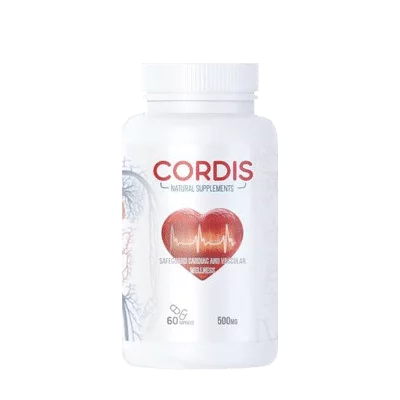
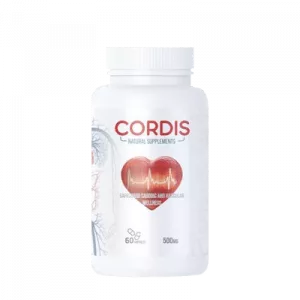
Cordis is an oral capsule food supplement for cardiovascular support. It is for adults who want help maintaining normal blood pressure, especially when stress, poor sleep, or low activity are factors. It works by supporting vessel tone and blood flow to help stabilise pressure more naturally.
Cordis is a capsule-based supplement positioned in the broad “Health and Beauty” (Υγεία και Ομορφιά) wellness category, with a focus on heart and blood vessel support. It is promoted for helping normalise blood pressure and for reducing the risk of hypertension-related complications when used alongside lifestyle measures.
It is not a fast “rescue” product for a hypertensive crisis. It is built for steady, course-based support.
In pharmacy practice, people usually consider products like Cordis when:
Active components: bioflavonoid complex (plant polyphenols for antioxidant and endothelial support). Excipients may include a carrier/filler (e.g., microcrystalline cellulose), anti-caking agent (e.g., silica), and a capsule or tablet base (e.g., gelatin or cellulose).
Take Cordis about 30 minutes before meals. Take one capsule in the morning and one capsule in the evening, with water, to spread support across the day.
A simple routine helps adherence:
Do not double up if you missed a dose earlier; just continue with the next scheduled capsule.
Cordis is used to support:
One sentence that matters: consistent lifestyle changes amplify results.
Do not use Cordis if you are pregnant or breastfeeding, if you are under 18 unless a clinician has advised it, or if you have ever reacted to similar supplements or suspect an allergy to its ingredients. If you already take blood-pressure medicines, adding Cordis may make you feel “too low” (dizzy when standing, unusually tired), so monitor how you feel and your BP trends and seek clinician advice if symptoms persist.
Most reported side effects are mild and tend to be short-lived:
Call for medical care urgently if allergic symptoms escalate (wheezing, facial swelling) or if dizziness is severe with fainting. A useful nuance: dizziness is more likely when standing up quickly, after alcohol, or when dehydrated—simple changes often fix it.
People get less value from Cordis when they fall into these traps:
Small detail from real-world use: some people feel light-headed after a hot shower when they start any vasodilatory support—hot water also dilates vessels, so spacing showers and the first days of use can reduce that “woozy” moment.
A practical clinical observation: patients who measure BP correctly (seated, arm supported at heart level, 5 minutes resting) are less likely to over-treat themselves based on one anxious reading. Another observation is that stress management is a real BP tool; the nervous system can push readings up even in younger adults, and any product that supports calmer vascular tone still works best when paired with sleep and movement goals.
Cordis is described as beginning to act within the first several hours, with steadier effects developing across a course. For BP support, the useful metric is a weekly average rather than a single reading, since stress, caffeine, and sleep can shift numbers day to day. In 2026, WHO educational materials still recommend home monitoring as a way to understand true BP patterns outside the clinic.
No—people using prescribed antihypertensives should treat Cordis as supportive, not as a substitute. Stopping proven BP medicines raises the risk of stroke, heart failure, and kidney damage over time. EMA-linked hypertension guidance in 2025–2026 continues to prioritise validated pharmacotherapy for diagnosed hypertension, with lifestyle measures as the foundation.
The most typical complaints are mild stomach upset, headache, light dizziness early on, and allergy-type skin reactions in sensitive users. Early dizziness often shows up when standing quickly, after alcohol, or when you are dehydrated. NAFDAC’s 2026 safety messaging encourages people to treat rash, swelling, or breathing difficulty as urgent warning signs for any health product.
You can, but caffeine can raise BP transiently in some people, which can confuse your self-checks. If you are monitoring trends, keep caffeine timing stable so you compare like with like. WHO public health advice in 2026 still highlights reducing stimulants if they trigger palpitations or higher readings.
Avoid Cordis in pregnancy, breastfeeding, and in anyone under 18 unless a clinician has advised it. Also avoid it if you have known allergy or intolerance to any component. If you are on multiple cardiovascular medicines, be alert for low-BP symptoms such as dizziness on standing, since combinations can add up, a point echoed in European medication-safety approaches referenced by EMA-aligned guidance.
Use a validated home BP monitor and record readings for at least 7 days, taking two measurements one minute apart each time and averaging them. Take readings after sitting quietly for five minutes, with the arm supported at heart level. This is consistent with monitoring methods promoted in guideline discussions across Europe and other regions in 2025–2026.
